QSolid Consortium Celebrates Project Achievements at Final Meeting in Jülich
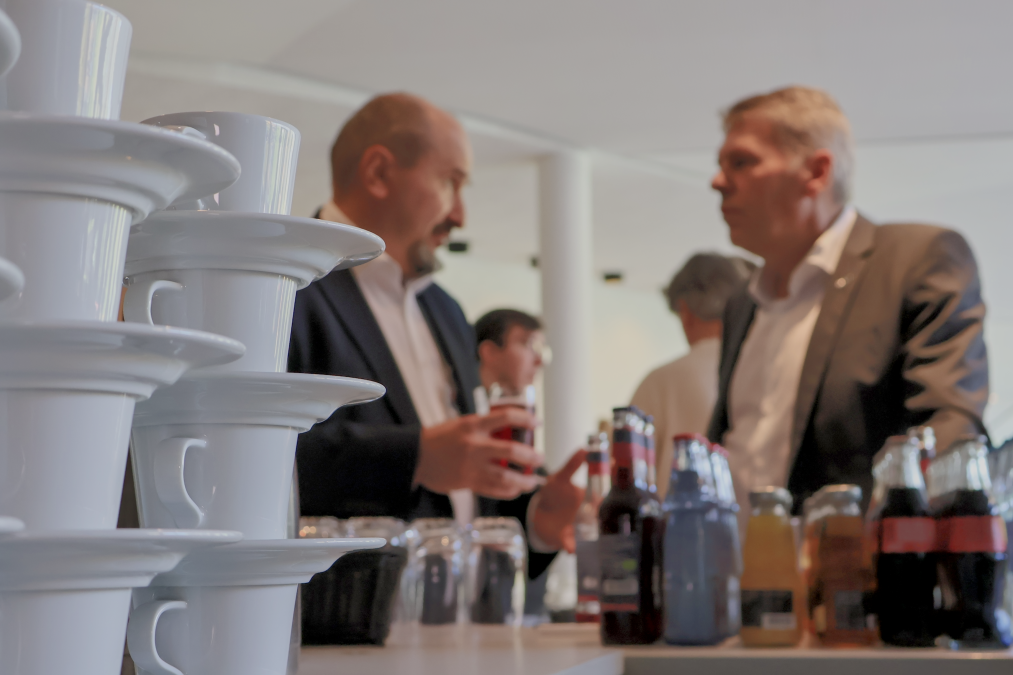
From 27 October to 29 October, around 100 consortium members gathered at Forschungszentrum Jülich for the final QSolid project meeting. Alongside presentations from the individual work packages, the three-day event focused on the project's achievements, progress in system integration and opportunities for future collaboration.
The meeting opened with a welcome note by project coordinator Prof. Dr Frank Wilhelm-Mauch (Forschungszentrum Jülich), who introduced the centre's quantum computing infrastructure and shared key scientific and administrative updates with the consortium. Paolo Bianco (Forschungszentrum Jülich) then presented the latest developments in systems engineering, followed by work package sessions highlighting progress in quantum hardware, software and control, applications, and high-performance computing (HPC) integration. The first day concluded with a discussion on the joint exploitation of project results and a networking dinner at the SeeCasino.
Advances in Quantum Gates and Promising New Materials
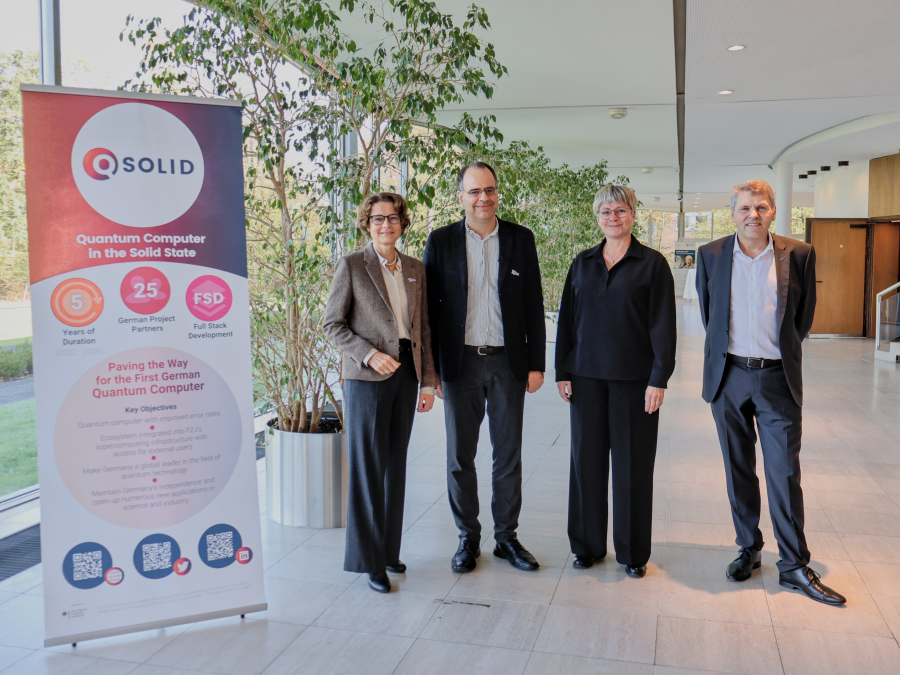
The second day began with opening remarks from two distinguished guests: Prof. Dr Astrid Lambrecht, Chair of the Board of Directors of Forschungszentrum Jülich, and Dr Michael Bolle, Chairman of the Board of Trustees of the Carl-Zeiss-Stiftung and a member of the QSolid Advisory Board. The consortium also welcomed Prof. Dr Andrea Kienle, Head of the Research Department at North Rhine-Westphalia's Ministry of Culture and Science, as well as Dr Daniel Esteve from CEA and Prof. Dr Marc Weber from KIT, who both serve as QSolid advisors.
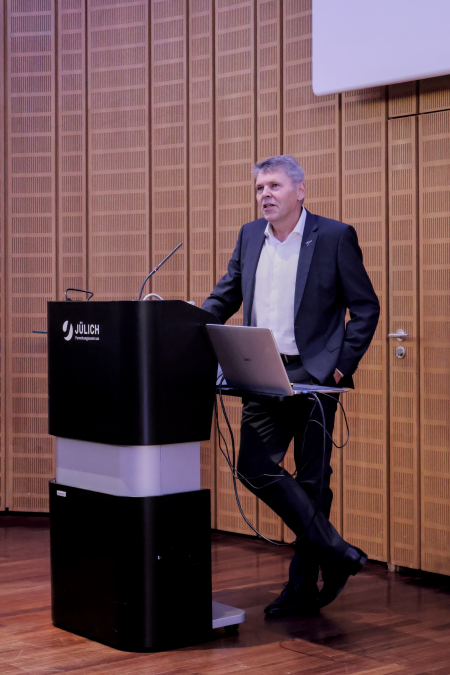
In his presentation, Frank Wilhelm-Mauch reflected on the project's journey, from the early development of superconducting qubits in Germany to the launch of QSolid and its subsequent achievements. Over nearly five years, what began as a loosely connected network of researchers and industry partners has evolved into a closely collaborating team that has made significant technological progress. Among the achievements highlighted were improvements in the speed and robustness of quantum gates, as well as advances in materials research and fabrication. Improved modelling now takes into account constraints related to quasiparticles, while a novel mask- and resist-free stencil process has enabled the fabrication of the first qubits using this approach.
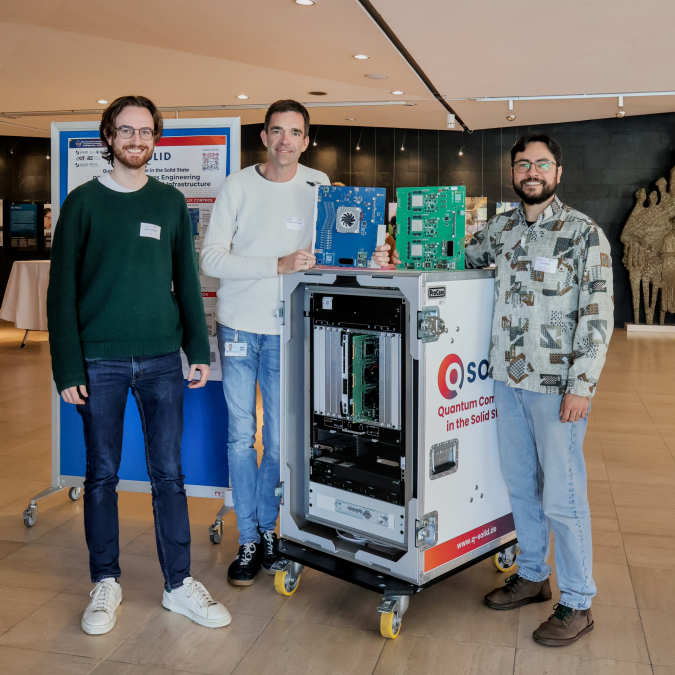
A particular focus was the successful integration of individual technologies into a functioning quantum computing demonstrator, illustrating the consortium's ability to combine complex hardware and software components into a unified system. “Quantum computing in Germany is currently evolving at a remarkable pace. We’ve seen this first-hand in QSolid, where we achieved a great deal all the way until this final stretch of the project. I am very optimistic about the future of our field and our team,” Wilhelm-Mauch concluded.
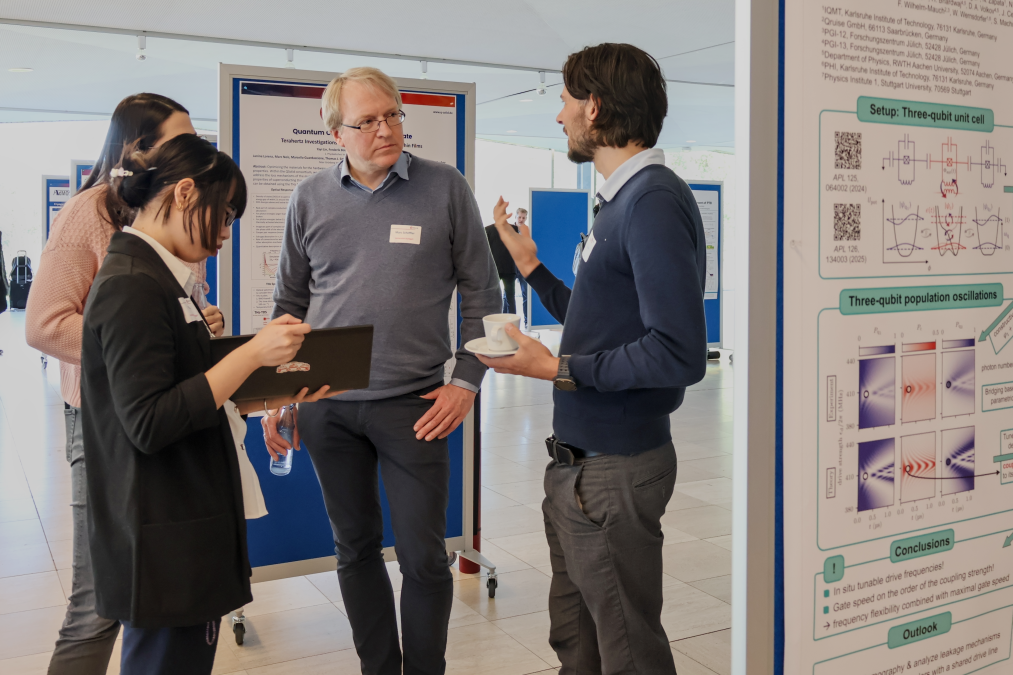
The programme continued with module presentations by project partners Supracon, Rosenberger, Leibniz IPHT, Physikalisch-Technische Bundesanstalt (PTB), and Karlsruhe Institute of Technology (KIT), as well as consortium members from Forschungszentrum Jülich (PGI-13 and PGI-4). The presentations were followed by a poster session showcasing further research results. Another highlight was a guided tour of the Jülich Nanocluster, a state-of-the-art facility for multi-material deposition and analysis, and the visitor corridor of the Helmholtz Nano Facility (HNF) cleanroom, offering participants a closer look at the research infrastructure at Forschungszentrum Jülich.
Tangible Results and Prospects for Future Collaboration
The final project meeting demonstrated that QSolid has already delivered tangible results ahead of its official conclusion in December. Key achievements include the development of reproducible wafer-scale qubit fabrication processes, which are set to be integrated into the European Fluxonix Foundry Service, as well as advances in room-temperature control systems. Significant progress has also been made in software integration and the integration of quantum hardware into Jülich's HPC environment, JUNIQ.
These achievements demonstrate how QSolid has successfully combined the expertise and capabilities of its partners to advance quantum computing technologies and strengthen Germany's quantum computing ecosystem.
Picture credits: Forschungszentrum Jülich